Placement
Reading a centre like an operator
11 August 2026 · 3 minute read
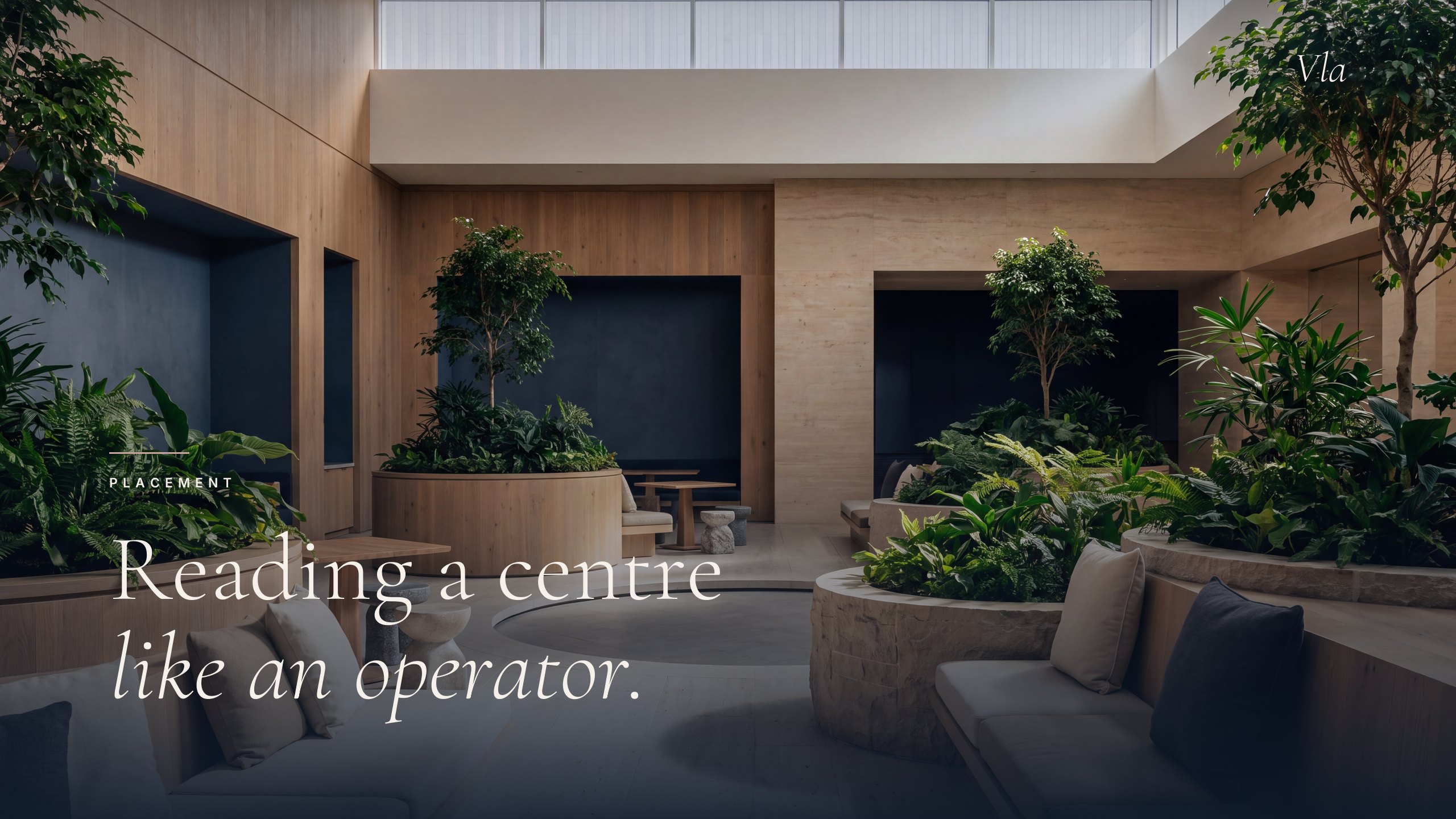
An operator standing in a concourse is not looking at the plan. They are watching where people slow down.
Give a leasing team and an experienced operator the same floorplate and they will mark different positions. Neither is wrong. They are answering different questions. The leasing team is asking where a unit can go. The operator is asking where a unit will be seen, approached and used.
Most placements that disappoint were agreed on the first question alone.
Four things the operator is reading
- Dwell, not footfall. Somewhere people already pause, because a queue forms out of a pause and never out of a stream.
- Sightline. Whether the unit is discovered from a distance or only noticed once passed, which is the difference between a destination and a surprise.
- Adjacency. What the neighbouring tenancy does to the read. The same unit beside a cinema forecourt and beside a pharmacy is two different propositions.
- Servicing. Whether the position can be restocked and cleaned without a trolley crossing a trading floor at the wrong hour.
Footfall tells you how many people walked past. Dwell tells you how many could have stopped.
Where the two reads disagree
The classic disagreement is the corridor. It has traffic, it has space, and on a plan it looks like an obvious candidate. In practice it is a transit route, and people in transit do not stop. The position measures well and trades poorly.
The mirror of it is the awkward pocket near an anchor entry or a seating cluster. On a plan it looks like leftover space. It is often the strongest position in the centre, because the pause is already happening and the unit only has to be there when it does.
The question to ask before agreeing a position
Not whether a unit fits. Whether anyone standing in that spot is already stopping, and if so, why. Where the answer is immediate, the placement will usually work. Where the answer needs an explanation, it usually will not.